The Art of Inner Balance: Why Equilibrium Matters More Than Happiness
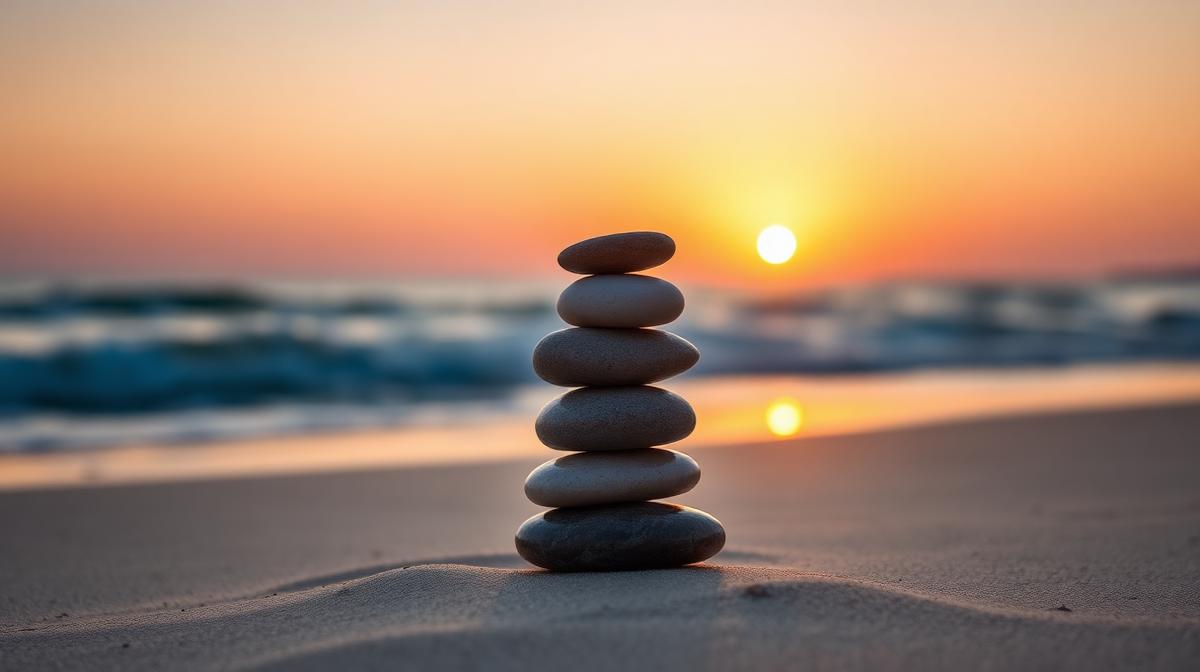
We've been sold a lie: that the goal of life is happiness. That if we make the right choices, buy the right things, achieve the right milestones, we'll arrive at a permanent state of joy. This pursuit of constant happiness is itself a major source of unhappiness.
The alternative isn't resignation or numbness. It's inner balance — what the Buddhists call equanimity, the Stoics call ataraxia, and modern psychology calls emotional regulation. It's the ability to maintain a stable center through life's inevitable fluctuations.
"Happiness is not a station you arrive at, but a manner of traveling." — Margaret Lee Runbeck
The happiness trap:
Psychologist Brock Bastian's research reveals a paradox: the more a culture values happiness, the more its members suffer from depression and anxiety. When happiness is the goal, any negative emotion feels like failure. You're not just sad — you're failing at being happy. This creates a secondary layer of suffering.
The hedonic treadmill compounds the problem. Research shows that we adapt to positive changes — a new job, relationship, or purchase — within about three months, returning to our baseline level of satisfaction. Chasing happiness through external achievements is like running on a treadmill: lots of effort, no actual movement.
The Motivational app doesn't promise happiness. It offers something better: daily encounters with wisdom that builds equanimity — the capacity to be okay regardless of circumstances.
What inner balance looks like:
Inner balance isn't emotional flatness. It's dynamic stability — like a skilled surfer who maintains their center of gravity while the waves constantly change beneath them. Balanced people still feel joy, sadness, anger, and fear. The difference is that these emotions flow through them rather than knocking them over.
Characteristics of inner balance:
Even-keeled response to good and bad news. Not euphoric over success or devastated by failure. Pleased by good outcomes, disappointed by bad ones, but not destabilized by either.
Comfort with all emotions. Not pursuing positive emotions or avoiding negative ones, but welcoming whatever arises as part of the full human experience.
Stable sense of self. Not inflated by praise or deflated by criticism. Knowing who you are regardless of external validation.
Present-moment orientation. Not dwelling in past regrets or future anxieties, but grounded in the reality of now.
Building inner balance:
1. Practice equanimity meditation. In this ancient Buddhist practice, you cultivate an attitude of balanced care toward all experiences — pleasant, unpleasant, and neutral. Begin by noticing a neutral sensation (the feeling of your feet on the floor) and practicing equal attention to it as you'd give to a strong pleasure or pain.
2. Develop response flexibility. Between stimulus and response, practice inserting a pause. This pause — even just three breaths — is where balance lives. Over time, this becomes automatic: event → pause → chosen response, rather than event → automatic reaction.
3. Cultivate a daily anchor practice. The Motivational app's daily quote ritual serves as an anchor — a moment of stability regardless of what the day brings. Whether you're celebrating or struggling, the practice remains the same. This consistency creates a reference point of calm.
4. Embrace the full spectrum. Stop categorizing emotions as "good" (happy, confident, peaceful) and "bad" (sad, angry, fearful). They're all information. They're all temporary. They're all part of being human. When you stop fighting half of your emotional range, balance becomes natural.
5. Study the balanced ones. Read the Stoics (Marcus Aurelius, Epictetus, Seneca). Study Buddhist equanimity. Learn from people who maintained their center through extraordinary circumstances. Their example teaches more than any technique.
The balanced life:
Inner balance doesn't make life less vivid — it makes it more vivid. When you're not desperately chasing highs or avoiding lows, you can actually experience what's happening. The sunset you notice on a Tuesday evening. The conversation that deepens unexpectedly. The quiet satisfaction of a day well lived.
These aren't peak experiences. They're balanced ones. And they're available every single day — not as a reward for achieving happiness, but as the natural result of being present, balanced, and whole.
Ready to start your journey?
Try the Motivational app for daily quotes, habits, widgets, and Moti AI coaching.
 Download free
Keep reading


Related quote collections
Browse all 60+ quote topics or read more on the blog.