Strategic Thinking for Your Personal Life: Playing Chess While Others Play Checkers
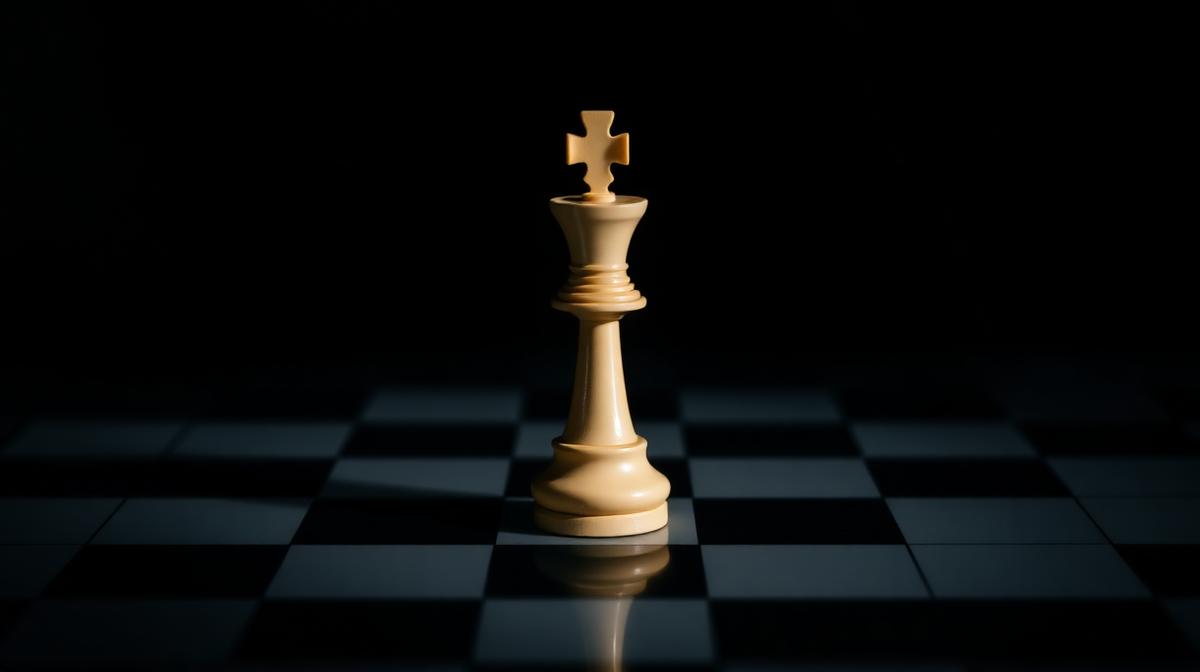
Most people approach their personal lives tactically — reacting to what's in front of them, solving today's problem, putting out the nearest fire. Strategic thinkers play a different game. They think in systems, consider second-order effects, and make today's decisions based on where they want to be in five years.
The difference isn't intelligence. It's perspective. And it can be learned.
"Strategy is about making choices, trade-offs; it's about deliberately choosing to be different." — Michael Porter
Tactics vs. strategy in personal life:
Tactical living: "I need to lose weight, so I'll start a diet Monday." Strategic living: "I want sustainable health, so I'll redesign my environment, relationships, and routines to make healthy choices the default."
Tactical living: "I'm unhappy at work, so I'll look for a new job." Strategic living: "What kind of life do I want in 10 years, and what career moves create the path to get there?"
Tactical living reacts to symptoms. Strategic living addresses systems.
The five principles of personal strategy:
1. Think in systems, not events. A single argument with your partner is an event. The communication pattern that produces recurring arguments is a system. Strategic thinkers fix systems; tactical thinkers fix events.
Ask yourself: What patterns keep repeating in my life? What systems are producing these patterns? How can I redesign the system rather than just managing the symptoms?
2. Consider second-order effects. Every decision has immediate consequences (first-order) and downstream consequences (second-order). Taking a high-paying job you hate might solve first-order financial problems while creating second-order health, relationship, and fulfillment problems.
The Motivational app's daily practice works through second-order effects. Reading one quote doesn't change your life (first-order). But the accumulated effect of 365 quotes — the shifted perspective, the expanded vocabulary of wisdom, the daily habit of reflection — transforms your mental operating system (second-order).
3. Optimize for optionality. Instead of betting everything on one outcome, make decisions that keep multiple good futures possible. Learning a new skill, building diverse relationships, maintaining physical health — these all increase your options regardless of how the future unfolds.
4. Play long games with long people. Naval Ravikant's advice: invest in relationships and pursuits that compound over decades, not months. Short games (quick wins, transactional relationships) have limited payoff. Long games (deep expertise, genuine friendships, compound learning) create exponential returns.
5. Know your asymmetric advantages. In chess, each piece has unique capabilities. What are yours? What can you do that most people can't? Where does your combination of skills, experiences, and personality create unique value? Strategy is about leveraging your distinctive strengths, not copying others' playbooks.
Strategic questions for your personal life:
For relationships: "Am I investing in the relationships that will matter most in 20 years? Am I maintaining relationships out of obligation rather than genuine value?"
For career: "Am I building skills that compound, or am I trading time for money? What would 10-year-me wish I had started today?"
For health: "Am I optimizing for how I feel today or how I'll function at 70? What small investment now prevents a major cost later?"
For growth: "Am I learning things that connect to each other, creating compound knowledge? Or am I collecting random information with no strategic coherence?"
The strategic review:
Schedule a quarterly "personal strategy review." Spend two hours examining your life through a strategic lens:
What's working? Double down. What's not working? Fix the system, not the symptom. What am I avoiding? Often, the most strategic move is the most uncomfortable one. What would I advise a friend in my situation? This external perspective often reveals strategic clarity that self-focus obscures.
The compound advantage:
Strategic personal living doesn't produce dramatic results immediately. But over years, the compound advantage becomes enormous. While tactical thinkers run in circles solving the same problems, strategic thinkers build systems that solve problems automatically, freeing energy for the next level of growth.
Start today: choose one area of your life and ask, "What's the system producing my current results — and how can I redesign it?"
Ready to start your journey?
Try the Motivational app for daily quotes, habits, widgets, and Moti AI coaching.
 Download free
Keep reading



Related quote collections
Browse all 60+ quote topics or read more on the blog.